
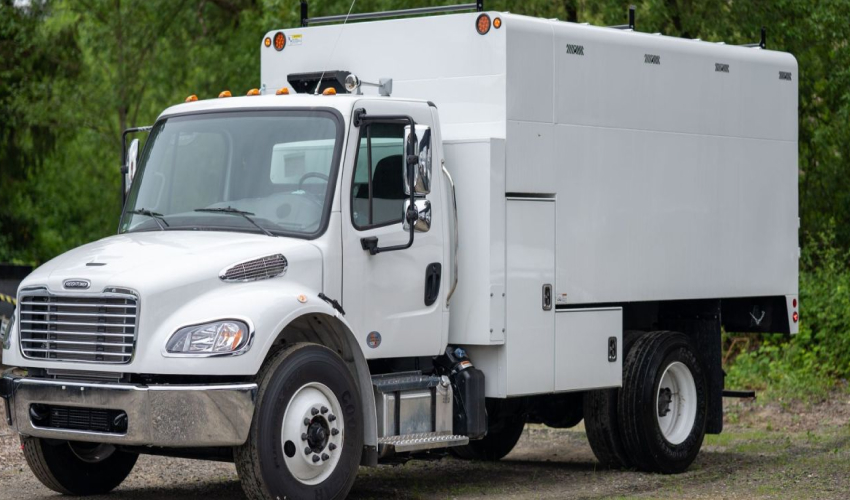
How Chip Truck Dump Runs Cost Your Crew Productive Time
Tree care crews have a lot to accomplish in a day. When a chip truck reaches capacity before the job is finished, however, the job can lose momentum while the truck leaves the site, unloads, and returns.
When crews are making multiple trips each week, the drive time, unloading time, and labor involved can add up. In some cases, your chip truck’s capacity may be affecting productivity more than you realize.
Understanding how often your crews leave jobsites to unload and how much time those trips require can help you determine whether your current chip truck setup is supporting an efficient workday.
How Chip Truck Dump Runs Affect Crew Productivity
A mid-job dump run can affect more than the time it takes to unload the truck. Depending on how your crew operates, sending the truck to a disposal or drop-off location can interrupt chipping, take crew members away from the jobsite, and slow progress until the truck returns.
Consider what happens while the truck is gone:
- How many crew members leave the site with the truck?
- Does chipping stop until the truck returns?
- Can the employees that remain continue working efficiently?
- How far away is the unloading location?
- How long does it take to unload and return?
Answers will vary be tree care company. The key question is how much productive crew time is tied up each time the truck leaves a jobsite.
Calculate the Productivity Impact of a Dump Run
Start by looking at the labor hours involved in each trip.
A simple calculation is:
Time per dump run x number of employees involved = labor hours per dump run
For example, suppose it takes 45 minutes to drive to the unloading location, dump the load and return to the jobsite. If two employees make the trip:
0.75 hours x 2 employees = 1.5 labor hours per dump run
Next, consider how often those trips happen.
Labor hours per dump run x number of dump runs = total labor hours spent on dump runs
If that same crew makes five mid-day dump runs over the course of a week:
1.5 labor hours x 5 trips = 7.5 labor hours per week
That’s nearly a full workday of employee time spent getting material off the truck rather than completing tree care work.
And that calculation only accounts for the employees making the trip. If the truck’s absence slows down the rest of the crew, the total productivity impact could be greater.
How Can Fewer Dump Runs Improve Crew Productivity
Now consider what happens if the truck and chip body are configured so the crew can complete the same work with fewer trips.
Using the example above, eliminating one 45-minute dump run involving two employees would recover 1.5 labor hours.
If that happens once a day over a five-day workweek; that’s;
1.5 hours x 5 days = 7.5 labor hours per week
Over time, those hours can create more room in the schedule to finish jobs sooner, take on additional work, or simply keep crews moving without unnecessary interruptions.
How Much Chip Truck Capacity Does Your Crew Need?
There isn’t one ideal chip truck capacity for every tree care operation. Start by looking at your typical workday.
- How quickly does your current truck fill? Does it regularly reach capacity before a job is complete?
- How many dump runs do your crews make? Look beyond unusually large jobs and consider what happens during a normal week.
- How long does each trip take? A nearby unloading location may create a relatively minor interruption. A longer drive can have a much greater effect on the workday.
- How many employees make the trip? The more crew members involved, the more labor hours each run consumes.
- What are you hauling? Wood chips, brush, logs, and other materials can have different volume and weight characteristics.
- How is the rest of the crew affected? Determine whether work can continue normally while the truck is away or whether its absence creates downtime elsewhere on the jobsite.
Looking at these factors together provides a better picture of whether your current truck capacity is well matched to your operation.
Bigger Chip Truck Capacity Isn’t Always Better
If frequent dump runs are cutting into productive work time, it may be worth evaluating whether your current chip truck is limiting productivity. But reducing dump runs isn’t simply a matter of selecting the biggest chip body available.
Start with how much usable capacity your truck can safely and legally support. An overweight truck can cost you in fines, downtime, and vehicle wear and tear while compromising safety. The right body and chassis combination should provide the capacity your operation needs without exceeding the truck’s Gross Vehicle Weight Rating (GVWR).
Your typical jobsite environment matters, too. A larger truck may provide more capacity but can be harder to maneuver in tight urban areas. If your crews frequently work on narrow streets or in areas with limited access, you may need to balance capacity with jobsite access.
Ultimately, the right chip body and chassis combination is the one that provides useful capacity for the work you do while helping your crews operate efficiently. ARBORTECH can help you explore chip body options based on your chassis, application and operational needs.
Reduce Dump Runs and Keep Your Crew Productivity
Dump runs are necessary part of tree care work, but you can reduce the impact they have on your productivity.
If your crews are regularly stopping work because a truck has reached capacity, calculate how many labor hours those trips consume. The result can help you determine whether a different chip truck configuration could reduce interruptions and help your crews make better use of the workday.
Request a quote from ARBORTECH to start configuring the right chip truck for your tree care operation.