
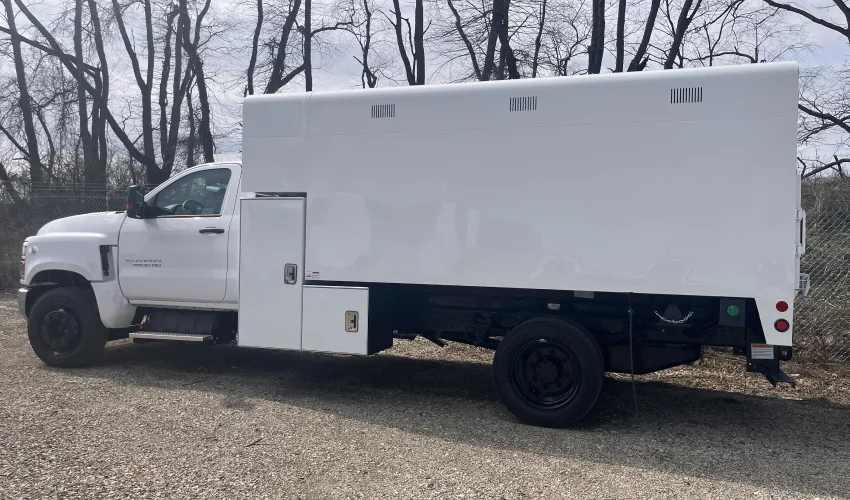
Alongside body type, choosing the right chip truck body size is the most critical decision when investing in a new unit. Understanding chip truck body sizes and how to choose the right size for your operation directly impacts how efficiently crews work, how often trucks need to dump, and how profitable each job becomes.
This arborist truck capacity guide breaks down common chip truck body sizes and shows you how to choose the right size based on your crew, job types, and operational needs.
Why Chip Body Size Plays a Critical Role in Arborist Productivity
Chip body size determines how long a crew can stay on site before stopping to unload. A body that is too small leads to frequent dump runs, wasted fuel, and lost labor hours. A body that is too large can create maneuverability issues and unnecessary weight.
The goal is to strike a balance. The right chip body capacity supports continuous workflow, reduces downtime, and keeps crews focused on the job instead of logistics.
What Sizes Do Chip Trucks Come In?
Most tree service chip truck sizes fall within a few standard length ranges:
- 9 to 10-foot bodies, often used for compact or urban applications
- 11 to 12-foot bodies, a common mid-size option for growing crews
- 14 to 16-foot bodies, designed for high-volume operations and larger crews
Each size category serves a different operational need, and the right choice depends on how your crews work day to day.
How Body Types Affect Capacity
Size is only part of the decision. Body type also influences how usable that capacity is on the job.
- Fixed roof bodies offer maximum containment and are ideal for consistent, high-volume chipping
- Retractable roof bodies balance containment and versatility, allowing quick transitions between chip hauling and open access
- Urban or aerial bodies are designed for tighter environments where maneuverability and access matter as much as capacity
Choosing the right combination of size and body type ensures your truck matches both your workload and how your crews operate in the field.
How to Choose the Right Chip Truck Size for Your Workload
Production volume and fill rate are critical factors in choosing the right chip truck body size. The body should help your crew stay productive without frequent dump runs.
Use these common scenarios as a guide:
- Light pruning and maintenance (lower volume, slower fill): 9 to 11-foot bodies
- Mixed work with regular removals (moderate volume): 11 to 14-foot bodies
- Heavy removals, storm cleanup, or contract work (high volume, fast fill): 14 to 16-foot bodies
As a quick sanity check, larger crews typically generate material faster, but job intensity can outweigh crew size. If the body fills before your crew can maintain workflow, you need more capacity. If you are hauling half loads or struggling with access, you may be oversized.
Urban vs Large Property Tree Work
Workload is only part of the equation. You also need to ensure the truck can navigate your typical job environments without slowing down your crew.
Compact Trucks for City Work
Urban environments demand maneuverability. Narrow streets, tight driveways, and limited parking make smaller chip bodies a practical choice.
Advantages of smaller bodies include:
- Easier navigation in residential neighborhoods
- Improved access to confined job sites
- Reduced risk of property damage
For city-based crews, a slightly smaller chip body often leads to greater overall efficiency.
Larger Bodies for Rural or High-Volume Operations
In rural settings or large properties, space is less of a constraint. Crews can benefit from larger chip body capacity because:
- Travel distances to dump sites may be longer
- Jobs often produce higher debris volume
- Fewer access limitations allow larger trucks
In these environments, maximizing capacity reduces trips and increases productivity.
Chassis and Weight Considerations
Once you have a general body size in mind based on volume and job type, this is the reality check. Your chassis and weight limits determine whether that size will actually perform the way you expect in the field.
Longer bodies provide greater chip volume, but that increased capacity also adds weight. Gross Vehicle Weight Rating (GVWR) defines how much total weight your truck can safely carry. This includes the chip body, chassis and payload (wood chips, equipment, etc.). Exceeding GVWR can lead to safety risks, compliance issues, and increased wear on the truck.
When evaluating size and weight, remember:
- Larger bodies hold more material per load
- Heavier loads can limit how much you can legally and safely carry
- Wet or dense material can reach weight limits before the body is full
The best setups balance chip truck body size, chassis capability and real-world payload demands to avoid over- or under-spec’ing your truck. This ensures the truck performs reliably under daily operating conditions.
Make the Right Chip Body Decision for Your Operation
The right chip body capacity helps reduce downtime, improve efficiency, and keep your operation moving without sacrificing mobility. For arborists, distributors, and fleet owners alike, that balance is what drives long-term productivity and growth.
Arbortech offers a variety of chip bodies and sizes to meet the needs of your operation. Contact us to discuss what you are looking for in a chipper truck body.